Email:
info@telic.digital
 Phone:
0303 666 5438
 Email:
info@telic.digital
Phone:
0303 666 5438

Automated Cash Application simplifies the process of matching incoming payments whether from cheques, BACS, Faster Payments, or card transactions to the correct customer invoices.
Traditionally, cash application can be a time consuming, manual task for accounts receivable teams, requiring significant effort to align individual payment transactions with their corresponding invoices.
Our platform uses industry leading technologies like Artificial Intelligence (AI), Machine Learning, and Robotic Process Automation (RPA), to automate those repetitive steps, making the process faster and more accurate. As the system learns over time, it gets better at matching payments, and with built in predictive analytics, it can flag and help resolve potential issues before they escalate.
By automating cash application, businesses can reduce errors, improve cash flow visibility, and free up valuable resources for higher value tasks, leading to efficiency and improvement in customer satisfaction.

To discover how you can automate your cash application process, book a demo to see the platform at work

Reduce manual efforts and cut operational costs by up to 90% with an intelligent cash application platform that automates payment matching and reconciliation.

Process automation identifies, tracks, and resolves exceptions in real-time, reducing delays and minimising manual interference in cash application.

Achieve full visibility into cash inflows and critical transactions, allowing your organisation to act promptly, optimise working capital, and improve financial forecasting.

With automated cash application, payments are posted accurately on the same day, while any exceptions are flagged for a quick solution. The system automatically captures remittance data, matches it to the right payments, and applies everything to the record. This means your team can spend less time on manual matching and more time resolving queries and chasing outstanding payments, helping to improve cash flow and efficiency.

Accounts receivable teams face constant pressure to keep up with cash application, especially during peak periods or financial month-end. The complexity of processing payments from multiple sources, whether it’s through bank transfers, card payments, or cheques, it gets harder to match transactions accurately. Poorly referenced payments, partial payments, and lump-sum payments covering multiple invoices add another layer of difficulty. When teams are under pressure, errors become more likely, leading to more reconciliation issues down the line. Without the right tools, cash application can quickly become a frustrating and time-consuming process.
Our platform captures remittance data from any source whether it’s email attachments, customer portals, or EDI (Electronic Data Interchange)—and automatically matches it with payment data from bank accounts. Once payments are accurately applied, the system automatically updates your record, integrating with leading ERP and finance systems like Oracle, SAP, Microsoft Dynamics, Sage, Infor, and Epicor.
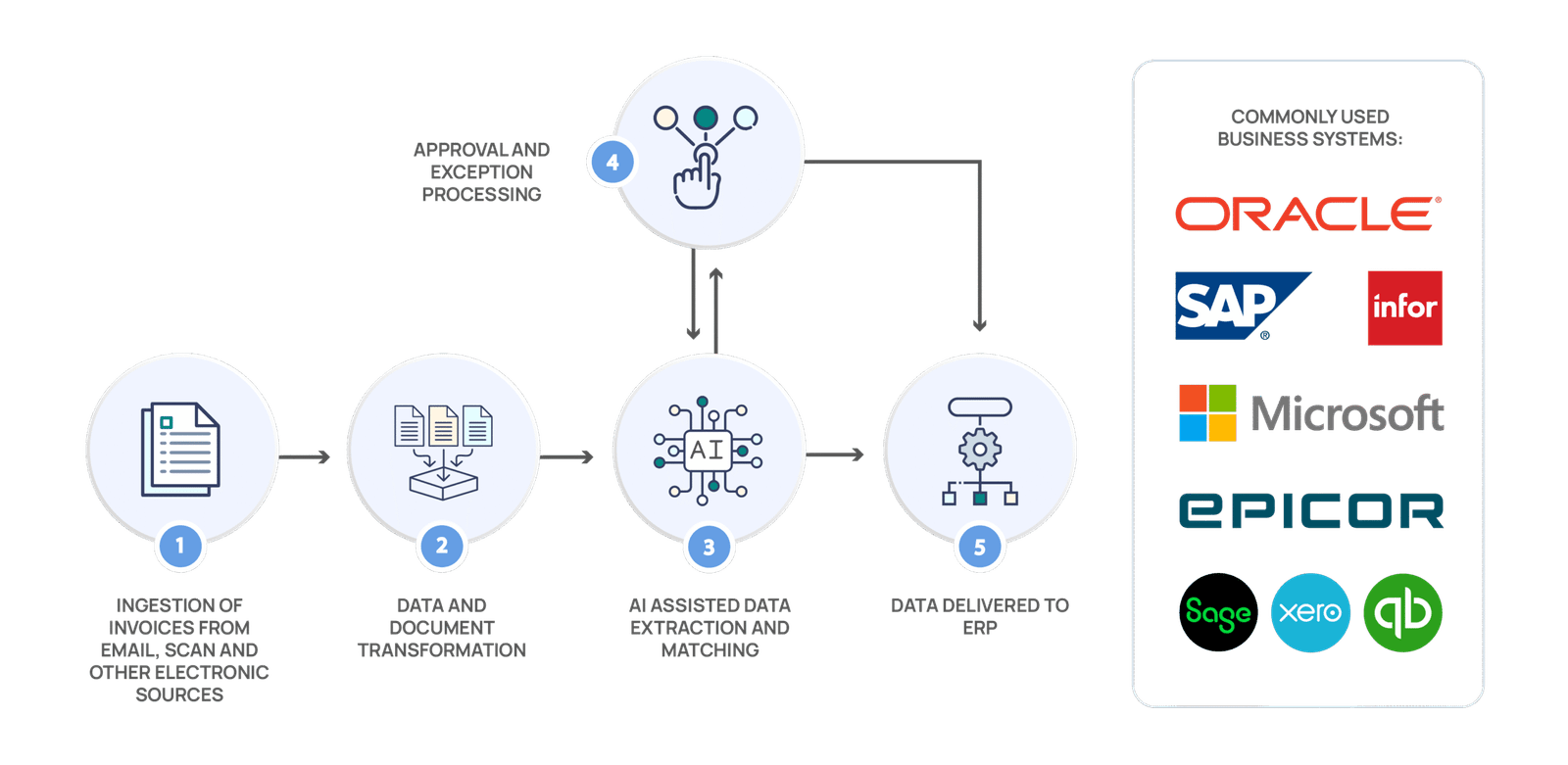
With automated cash application, payments are applied accurately and instantly, so your team spends less time on data entry and more time on other priorities resolving exceptions and focusing on higher value tasks. Keeping your record balanced has never been this easy.
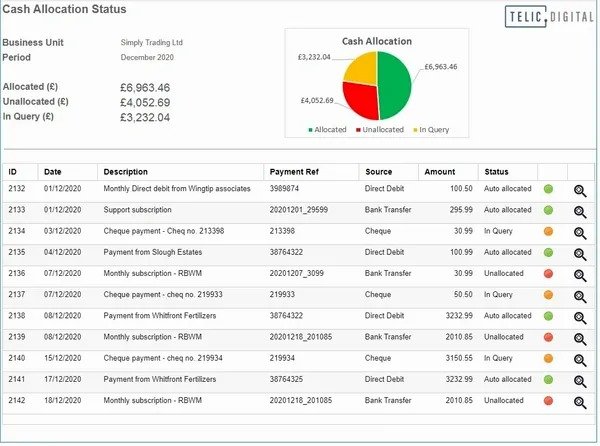
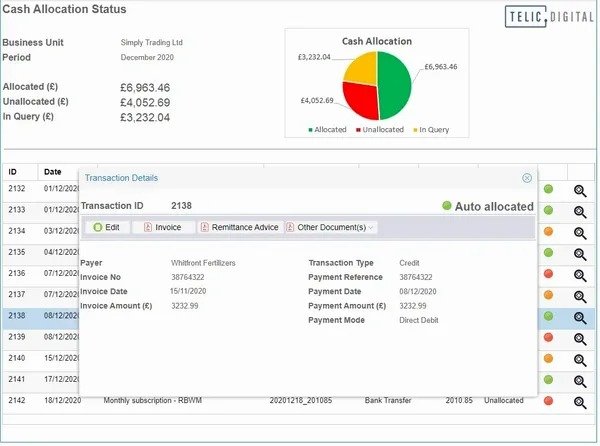
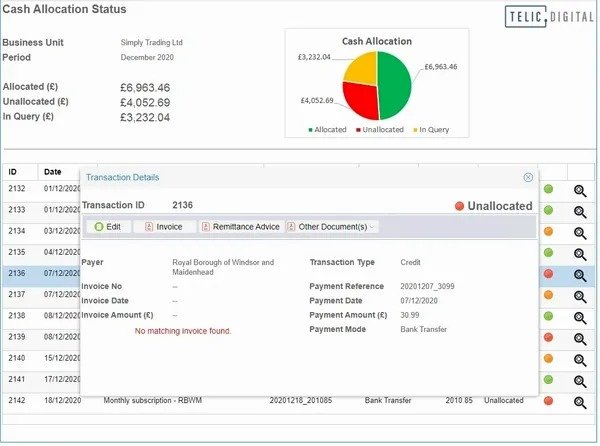


Cash application is the process of recording customer payments and matching them to the correct invoices. A finance team typically receives payment information from bank files, remittance advice or other sources, identifies which invoices have been paid, and then updates the finance system. When payment details are incomplete or don’t match, the item needs further investigation.
Cash application doesn’t create new cash, but it can help finance teams understand what has been paid and what remains outstanding sooner. By reducing delays in matching and recording payments, teams can get a clearer view of receivables and follow up on unpaid invoices more promptly.
Common challenges include missing or inconsistent remittance information, payments covering multiple invoices, short payments, deductions and manual data entry. Automation can capture information from sources such as emails, attachments, portals and EDI, then match it against payment and invoice records. Items that can’t be matched confidently can be flagged for review.
Cash application software helps finance teams capture payment and remittance information, match payments to invoices and update records. It can automate routine matches and help teams identify items that need attention.
The software uses available payment and remittance details such as customer references, invoice numbers and amounts to identify likely matches. Matching rules can be configured around an organisation’s processes. Where information is missing, or a match is uncertain, the item can be sent for review.
It can, depending on the software and how the solution is configured. Telic’s cash application solution can capture remittance information from sources including emails, attachments, portals and EDI, helping bring payment details into a more consistent process.
The payment can be flagged for investigation so a team member can review the available information, resolve the issue and complete the match. This gives finance teams a way to focus on exceptions rather than checking every payment manually.
Automation can capture payment information, apply matching rules and process straightforward transactions with less manual handling. Finance staff can then spend more time resolving exceptions and managing customer accounts.
It can be configured to support multi-entity processes, subject to the organisation’s requirements and finance systems. The solution needs to account for the relevant entities, payment sources, matching rules and approval processes.
Integration connects the cash application process with the finance or ERP system already in use. This allows relevant payment, customer and invoice information to be used in matching, with completed results passed back according to the agreed configuration. Telic focuses on building around existing systems and processes.
When payments are matched and recorded more promptly, finance teams can see which invoices have been paid, which remain outstanding and which transactions need investigation. This supports clearer receivables reporting and more informed follow-up.
The timeline depends on factors such as the systems involved, payment sources, transaction volumes and complexity of the matching rules. Telic works with each organisation to understand its processes and configure an approach around its requirements.